StrandPilot
Enzyme supplier for noodle manufacturing teams that need texture to hold at scale
Instant noodle texture is built in a moving process: flour quality, hydration, mixing, sheeting, steaming, drying or frying, cooling, and packaging all interact. When dough turns sticky, strands crack, bite weakens, or rehydration drifts, the right enzyme strategy can help convert formulation uncertainty into a controlled production variable.
StrandPilot supplies enzyme solutions for noodle manufacturing with practical technical support for R&D teams, plant trials, and scale-up. We help you connect the symptom on the line to the likely formulation lever: xylanase for dough extensibility and sheeting response, glucose oxidase for structure and bite resilience, amylase for hydration and cooked eating quality, or a process adjustment when enzyme addition is not the root cause.
Built around the problems noodle factories actually see
Sticky dough and unstable sheeting
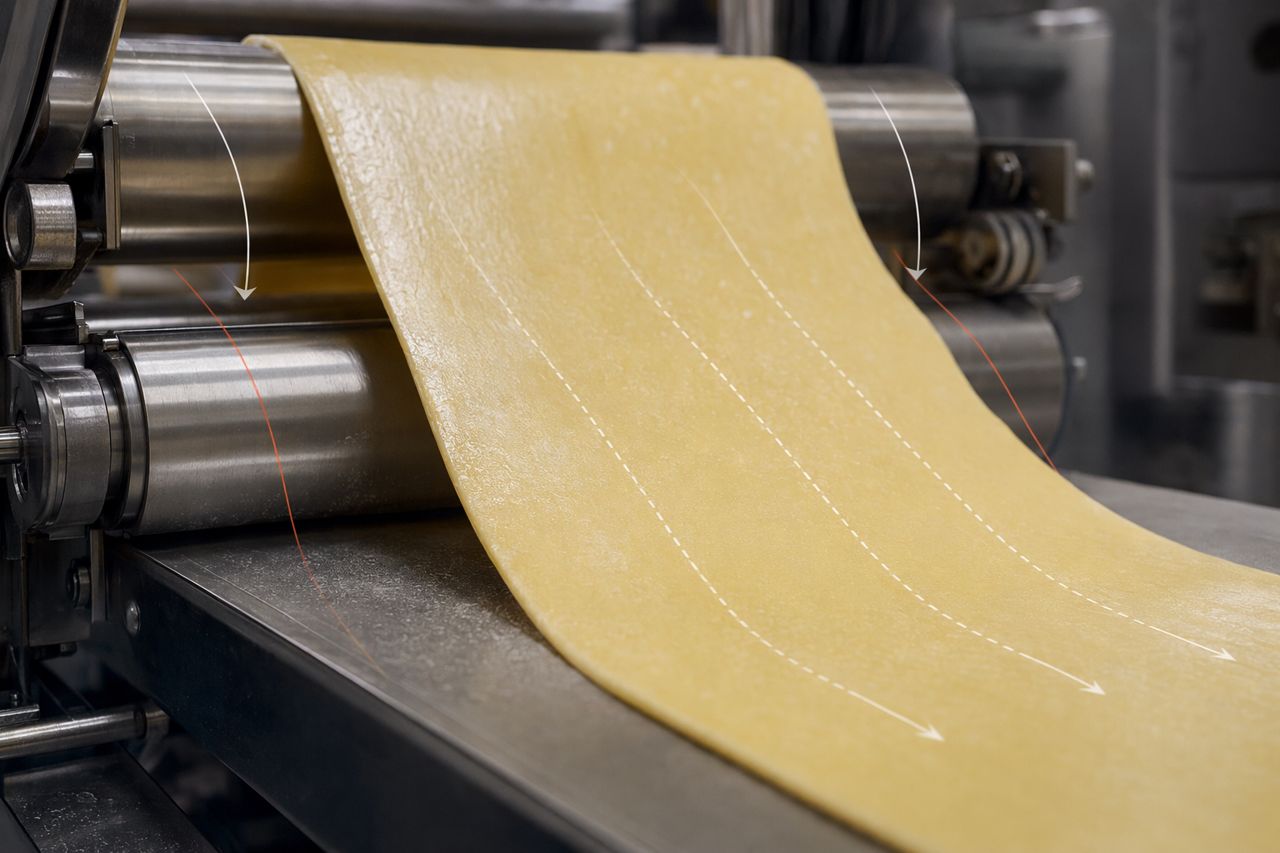
If dough grabs the rollers, tears at gauge reduction, or forces operators to slow the line, enzyme selection must be matched to flour behavior and water absorption. StrandPilot helps evaluate whether controlled xylanase use can improve dough flow, extensibility, and sheet uniformity without pushing the system into slackness.
Weak bite or soft eating texture
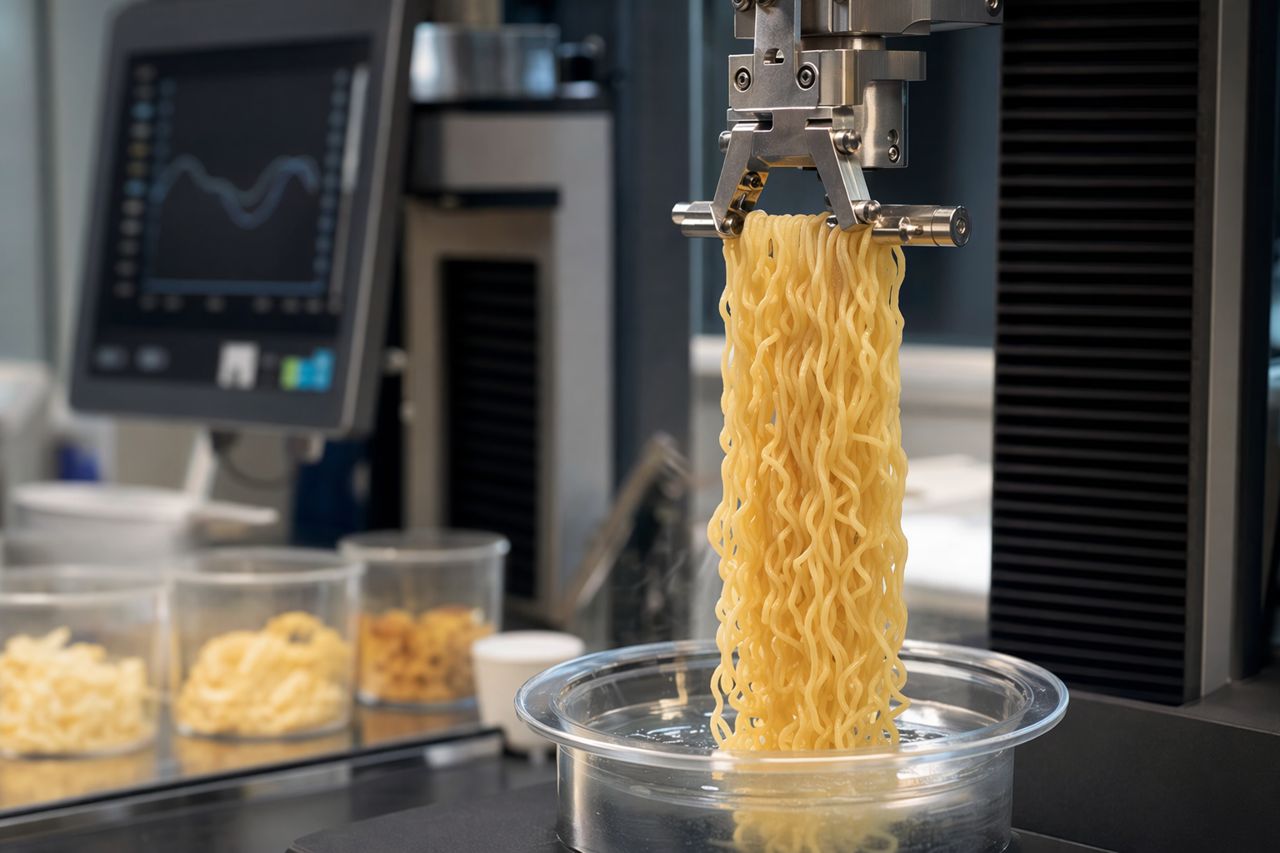
When cooked noodles lose spring, collapse quickly in hot water, or vary between batches, protein network strength and starch behavior both need attention. Glucose oxidase can support a more resilient structure, while amylase selection may help refine hydration and cooked texture. The goal is not a generic softer or firmer noodle; it is a repeatable bite profile that matches your target product.
Cracking, strand breakage, and block damage
Cracking can come from dough sheet stress, uneven moisture movement, drying or frying imbalance, or formula sensitivity. StrandPilot supports trials that separate enzyme-driven handling effects from mechanical and thermal causes, so teams avoid overcorrecting the recipe when the line condition is the real constraint.
Rehydration lag and uneven cooking performance
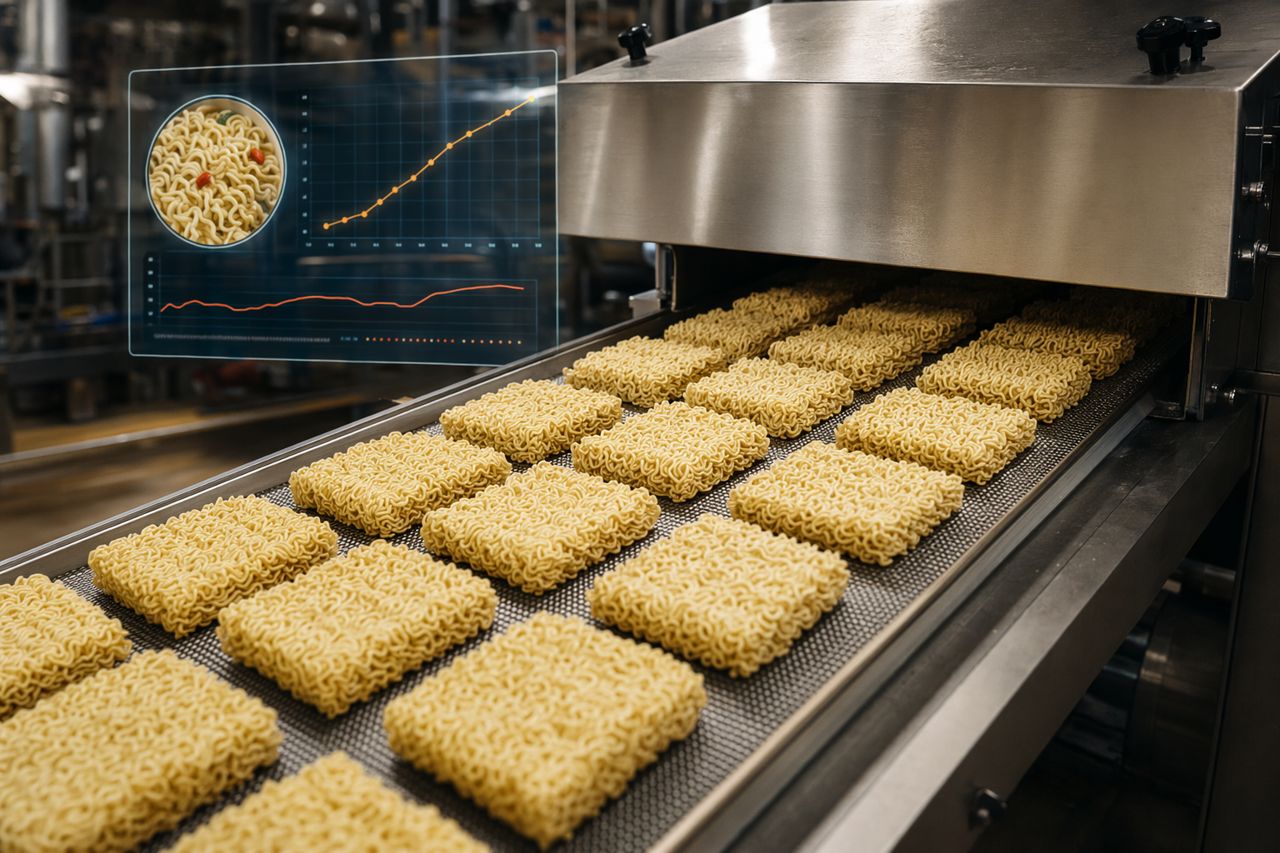
Cup and packet noodles need predictable water uptake. If the block hydrates slowly, stays dense in the core, or produces inconsistent mouthfeel, enzyme strategy can be assessed alongside steaming, frying or drying profile, noodle thickness, and starch source. We focus on the full cooking performance window, not one isolated lab observation.
Enzyme levers for instant noodle production
Xylanase for dough handling and sheet response
Xylanase can help manage arabinoxylan-related water binding and dough flow, making it useful when the target is smoother sheeting, improved extensibility, or reduced processing resistance. StrandPilot helps define a practical dosage window for your flour system and line speed.
Glucose oxidase for structure and bite resilience
Glucose oxidase can support oxidative strengthening in dough systems where a firmer, more elastic bite is desired. It may be useful when noodles need better strand integrity, improved chew, or greater tolerance through steaming and drying or frying.
Amylase for hydration behavior and cooked texture
Amylase can influence starch-related hydration and eating quality. In noodle manufacturing, the benefit depends heavily on flour, starch blend, thermal process, and finished product format. StrandPilot helps avoid over-softening while targeting faster, more even rehydration.
Process-aware recommendations
Not every noodle issue should be solved with an enzyme. Hydration sequence, mixing time, dough rest, roller gap progression, steam exposure, drying curve, frying conditions, and cooling can all dominate the result. Our support starts with the symptom, then narrows the likely cause before recommending a product and trial plan.
What StrandPilot helps you control
- Dough extensibility and roller release
- Sheet smoothness and thickness consistency
- Strand integrity through cutting, steaming, and drying or frying
- Bite firmness, elasticity, and chew recovery
- Rehydration speed and uniformity
- Cooking loss and broth clarity targets
- Batch-to-batch sensory consistency
- Scale-up from bench formula to production line
A practical workflow for R&D and plant teams
1. Define the texture target
We start with your finished product goal: firm and elastic, soft and quick-cooking, high spring, low breakage, reduced cooking loss, or a specific regional eating profile.
2. Map the process window
We review flour type, starch additions, water level, alkaline salts if used, mixing, resting, sheeting, steaming, drying or frying, and packaging requirements.
3. Select the enzyme route
We recommend candidate enzyme types and a controlled trial range based on the problem: handling, structure, hydration, cooked texture, or stability.
4. Trial against production realities
Pilot results only matter if they survive the line. StrandPilot supports evaluation with practical checkpoints such as dough feel, roller behavior, strand breakage, block shape, rehydration, bite, and sensory consistency.
5. Lock the specification
Once the target is reached, we help you document the enzyme addition point, dosage range, handling requirements, and quality checks for routine production.
Why instant noodle manufacturers choose StrandPilot
- Technical recommendations tied to noodle process conditions
- Enzyme options aligned with texture and line-stability goals
- Support for troubleshooting before scale-up costs increase
- Clear communication for R&D, QA, procurement, and production teams
- Supply discussions structured around commercial manufacturing needs
Request a quote
Ready to evaluate an enzyme solution for your noodle line? Use the on-site request form and include as much production context as possible.
Helpful details to include
- Product type: cup noodle, packet noodle, fried, air-dried, fresh, or semi-dried
- Main issue: stickiness, weak bite, cracking, rehydration lag, cooking loss, or line instability
- Flour and starch base
- Current process outline: mixing, resting, sheeting, steaming, drying or frying
- Target eating texture and shelf-life expectations
- Estimated monthly volume and preferred packaging format
StrandPilot helps noodle manufacturers make enzyme decisions that are practical on the line, measurable in the bowl, and repeatable across production runs.