Enzyme Supplier for Noodle Manufacturing
StrandPilot helps instant noodle and dry noodle manufacturers translate flour variation, hydration targets, sheeting behavior, steaming response, drying conditions, and finished bite into a more controllable production system.
As an enzyme supplier for noodle manufacturing, we support R&D, QA, and production teams with practical enzyme selection for dough rheology, strand integrity, bite firmness, cooking loss, and line stability. Our focus is not on selling a generic ingredient. It is on helping your team build predictable noodle performance from pilot bench through factory scale.
Request a quote for enzyme recommendations matched to your noodle format, flour base, process flow, and texture target.
Enzymes for factory-ready noodle texture control
Noodle factories rarely need “more softness” or “more strength” in isolation. They need dough that sheets cleanly, strands that separate consistently, blocks that form reliably, and finished noodles that rehydrate with the intended bite.
StrandPilot enzyme solutions are selected around production outcomes such as:
- Dough extensibility during mixing, resting, and sheeting
- Smooth sheet formation with lower tearing risk
- More consistent strand cutting and separation
- Improved tolerance to flour quality variation
- Controlled bite firmness after cooking or rehydration
- Reduced stickiness and surface breakdown
- Cooking loss management
- Stable block shape through steaming, drying, or frying
- Repeatable sensory profile across production lots
How StrandPilot approaches noodle enzyme formulation
Every noodle line has its own balance of flour protein quality, starch behavior, alkaline salt system, hydration, resting time, roller profile, steam exposure, and drying or frying conditions. StrandPilot starts with those variables before recommending an enzyme strategy.
We typically evaluate three enzyme families for noodle applications: xylanase, glucose oxidase, and amylase. Each can influence the dough system differently, and the best result often comes from a controlled blend rather than a single-function approach.
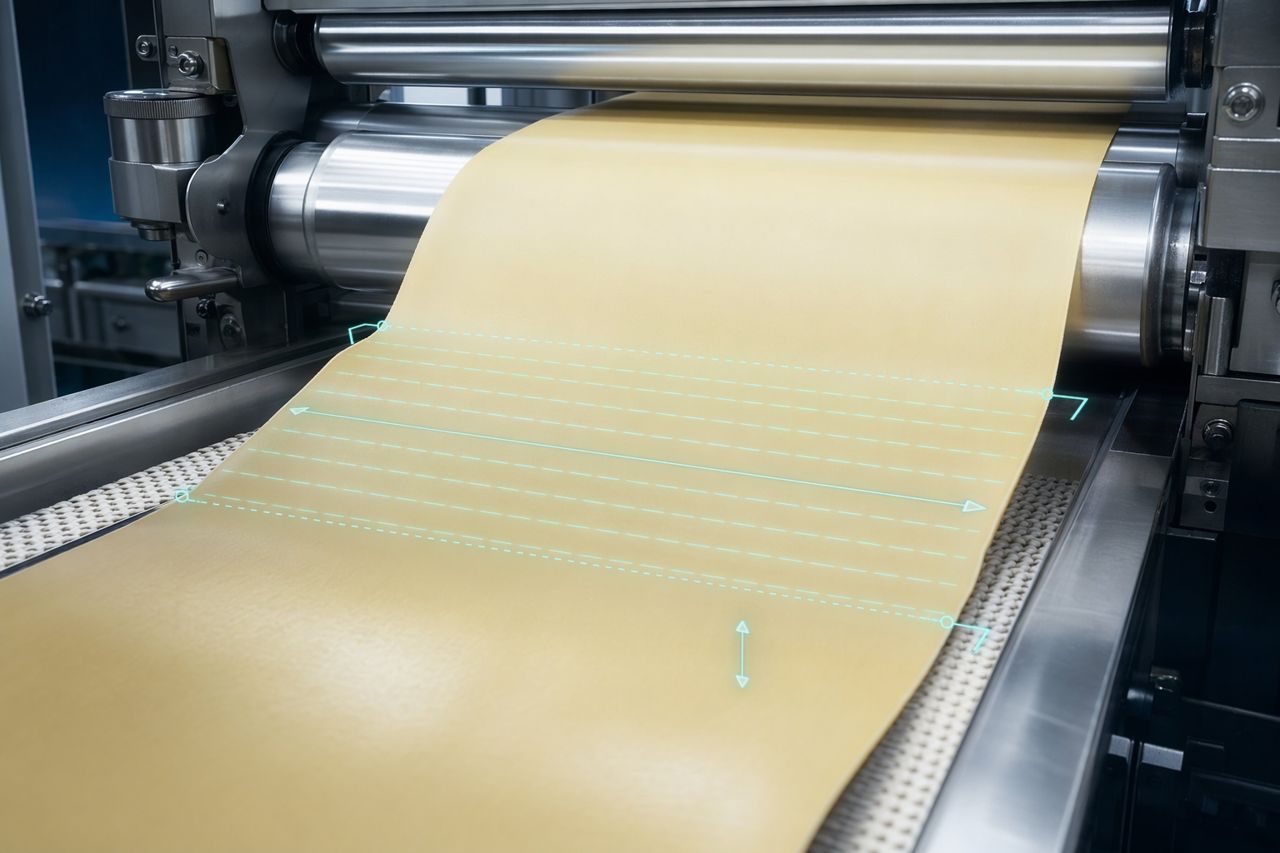
Xylanase for dough extensibility and sheeting behavior
Xylanase can help manage arabinoxylan interactions in wheat flour systems, supporting more workable dough and improved sheet uniformity. In noodle production, this may help R&D teams target:
- Easier dough relaxation during sheeting
- Reduced cracking or edge roughness
- More consistent sheet thickness
- Improved strand formation
- Better process tolerance when flour absorption shifts
For factories running high-speed sheeting and cutting, xylanase selection must be controlled carefully. The goal is improved handling, not over-relaxed dough that loses strand definition.
Glucose oxidase for dough strength and bite structure
Glucose oxidase can support oxidative strengthening in dough systems. In noodle manufacturing, this is useful when the target is firmer bite, better strand resilience, or improved tolerance during steaming and drying.
Potential manufacturing benefits include:
- Stronger dough film during sheeting
- Improved strand elasticity
- Better bite firmness after cooking
- Reduced surface softness in the finished noodle
- More stable processing when flour strength varies
StrandPilot helps manufacturers balance glucose oxidase with hydration, mixing energy, resting time, and alkaline conditions so the effect supports texture instead of creating excessive toughness.
Amylase for starch behavior, cooking response, and eating quality
Amylase can influence starch conversion and water interaction, which matters in noodle cooking performance and rehydration behavior. For instant noodle producers, this can support a more controlled relationship between processing conditions and final eating texture.
Application targets may include:
- More consistent rehydration curve
- Balanced firmness and chew
- Improved surface feel after hot-water preparation
- Reduced batch-to-batch texture drift
- Better alignment between lab-cooked and consumer-prepared texture
Amylase use in noodle systems should be matched to flour type, process temperature, moisture profile, and desired finished product. StrandPilot supports this matching process with formulation guidance and trial planning.
Built for instant noodle, dry noodle, and specialty noodle lines
StrandPilot works with manufacturers producing a range of noodle formats, including:
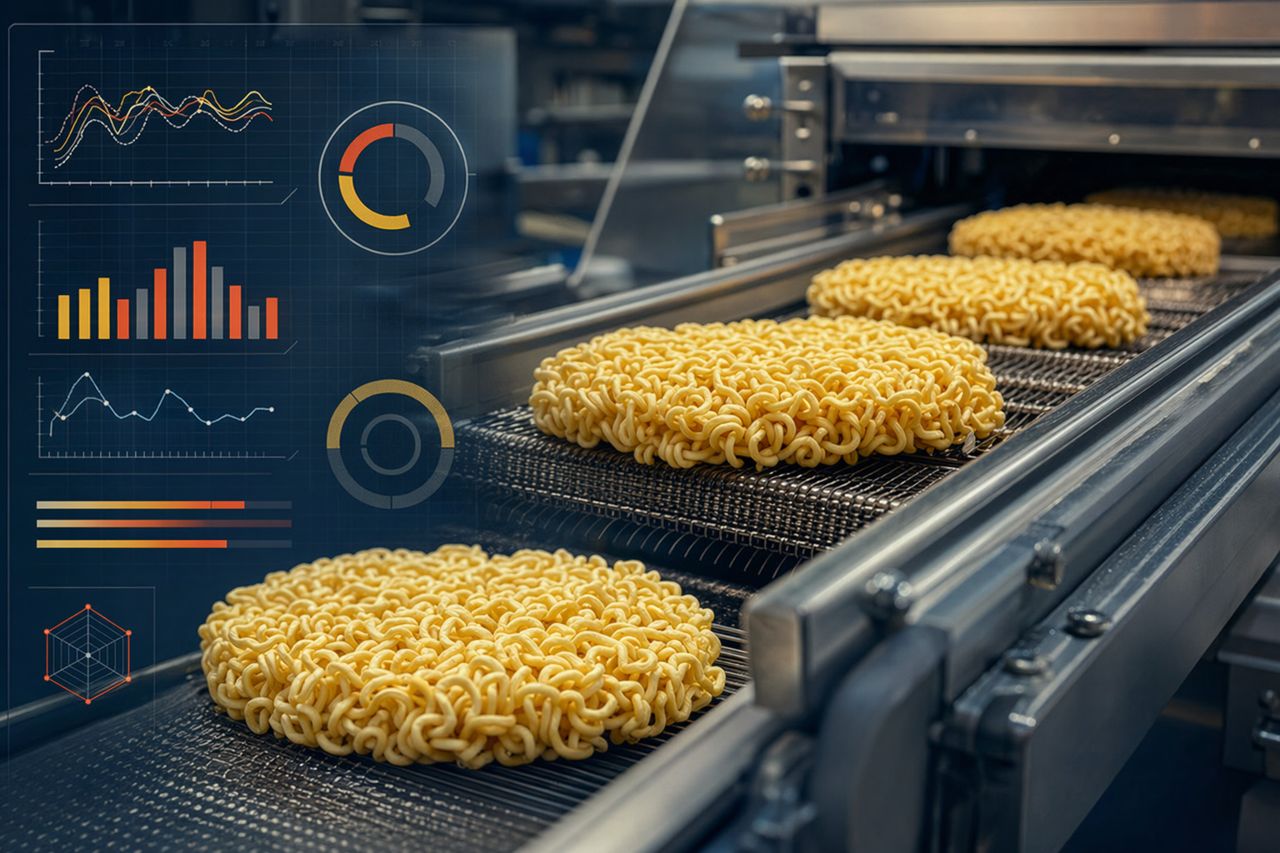
- Fried instant noodle blocks
- Air-dried instant noodles
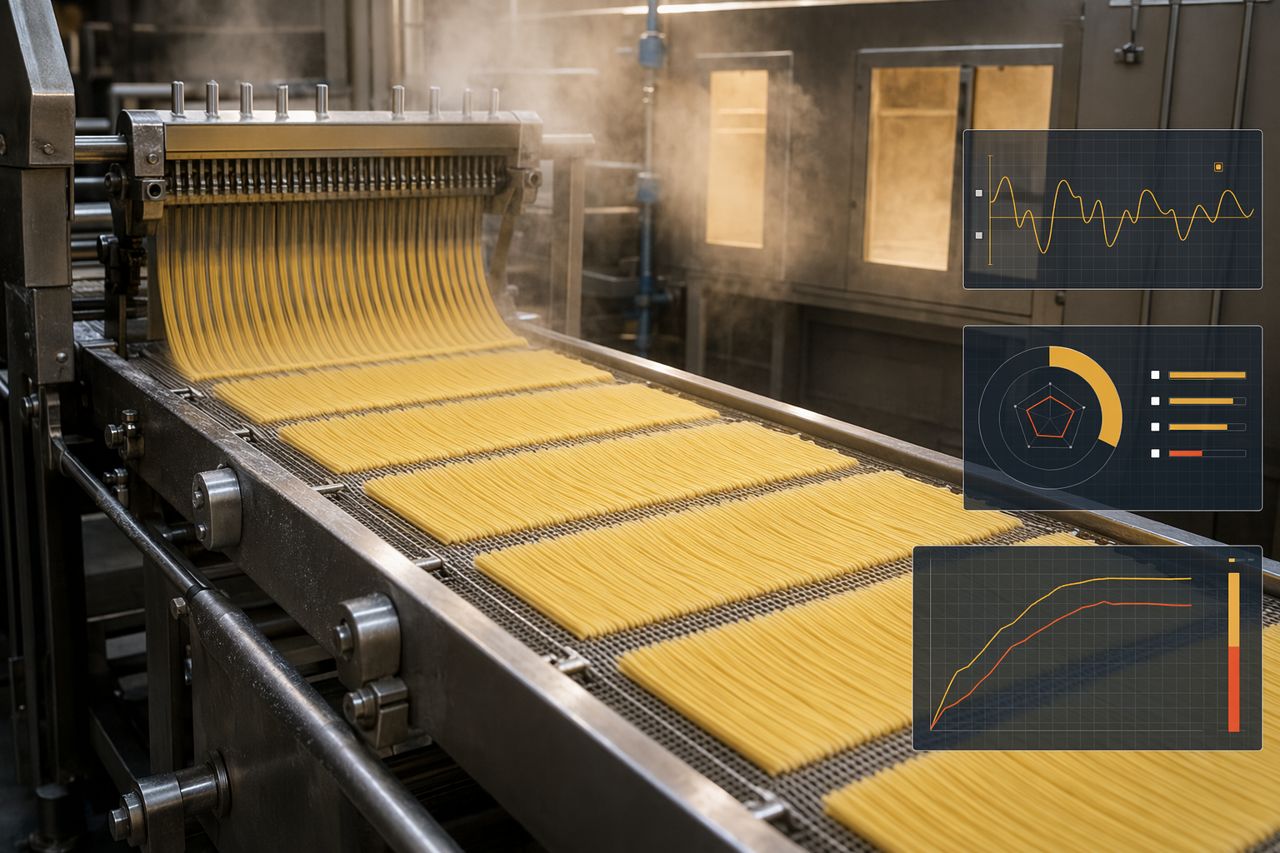
- Steamed and dried noodles
- Wheat noodles
- Alkaline-style noodles
- Cup and bowl noodle formats
- Private-label and export-oriented products
- Reformulated noodles for specific bite, hydration, or processing targets
Whether your factory is solving a current line issue or developing a new product, we help connect enzyme function to measurable plant outcomes.
Common production challenges we help address
Dough sheets tear, shrink, or show uneven thickness
This can come from flour variation, hydration mismatch, insufficient relaxation, or dough structure that is too tight or too weak. StrandPilot evaluates whether xylanase, glucose oxidase, or a balanced system can improve sheeting behavior while protecting strand definition.
Strands stick, clump, or lose definition
Poor strand separation may be linked to surface moisture, starch behavior, dough strength, or cutting performance. Enzyme selection can help tune the dough matrix so strands hold shape through cutting, steaming, and forming.
Finished noodles lack bite consistency
Texture inconsistency can show up as soft centers, overly firm bite, surface mushiness, or variable chew between batches. StrandPilot supports enzyme strategies that align flour quality, processing conditions, and finished sensory targets.
Cooking loss is too high
Excessive cooking loss affects broth clarity, mouthfeel, consumer experience, and quality perception. Enzyme systems may help improve matrix integrity and starch behavior, depending on the formula and process.
Scale-up results do not match pilot trials
A formulation that works in the lab may behave differently under full sheeting pressure, steam exposure, drying airflow, or frying conditions. StrandPilot supports scale-up with practical dosage window planning, trial checkpoints, and adjustment logic for plant teams.
R&D-led support for commercial noodle plants
StrandPilot is built for B2B manufacturing conversations. We do not expect your team to translate generic enzyme descriptions into factory decisions alone.
Our support can include:
- Review of noodle type, flour specification, and target texture
- Process mapping from mixing through packaging
- Enzyme selection for extensibility, strength, bite, or rehydration
- Trial design for bench, pilot, and production validation
- Guidance on dosage windows and adjustment points
- Support for sensory and QA interpretation
- Scale-up troubleshooting when production behavior shifts
What we need to recommend the right enzyme system
To prepare a relevant quote and technical recommendation, please share as much of the following as possible:
- Noodle format and finished product target
- Flour type, protein range, and key flour challenges
- Mixing, resting, sheeting, steaming, drying, or frying process overview
- Current pain point: handling, strand quality, bite, cooking loss, rehydration, or consistency
- Target texture language used by your R&D or sensory team
- Current production scale and intended trial scale
- Any clean-label, regional, or customer specification requirements
Why noodle manufacturers choose StrandPilot
StrandPilot combines enzyme know-how with a practical understanding of noodle production. We focus on the manufacturing details that determine whether an enzyme solution is useful on a real line: dough behavior under rollers, strand stability through steam, moisture movement during drying or frying, and bite consistency after preparation.
You get a supplier conversation centered on production value, not a generic catalog response.
Request a quote
Tell us what noodle format you produce, what texture or line challenge you want to solve, and what process constraints we should consider. StrandPilot will recommend an enzyme direction and provide a quote for your trial or production needs.
Use the on-site request form below to request a quote for noodle manufacturing enzyme solutions.
Quote request checklist
- Product type
- Monthly or trial volume estimate
- Target application: xylanase, glucose oxidase, amylase, or blended system
- Main production issue or texture target
- Country or region of manufacture
- Preferred response timeline